NAD+: the molecule behind the longevity boom, and what human trials actually show
Every human cell runs on NAD+, and levels fall in many ageing tissues. Raising it is easy in a mouse and in a blood test. Showing that it helps people has proved much harder.

At a glance
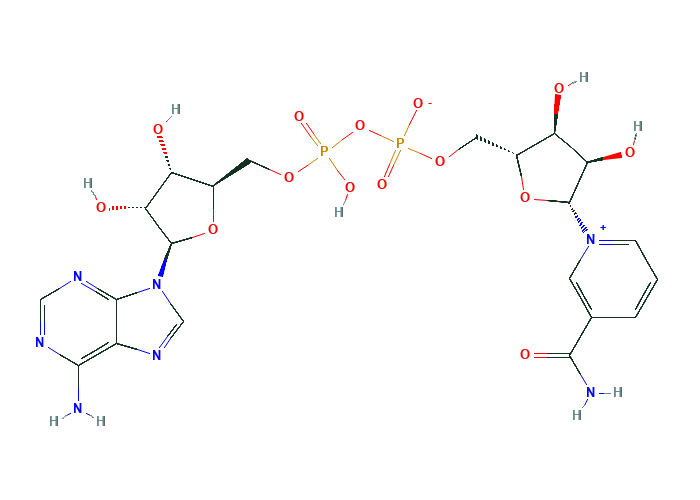
- NAD+ (nicotinamide adenine dinucleotide) is a coenzyme in every living cell. It shuttles electrons in energy metabolism and is consumed by sirtuins, PARPs and CD38 [2].
- It was first detected in 1906 as a heat-stable "coferment" in yeast juice [1].
- NAD+ falls with age in many animal tissues. In humans the decline is documented in skin and brain, but its size varies widely between tissues and studies [3,4].
- The oral precursors NR and NMN reliably raise NAD+ in blood. Effects on health outcomes in trials have been modest, mixed or absent [6,7,8,12].
- In 2026, a 410-patient phase 3 trial of NR in early Parkinson's disease found no benefit, with slightly worse scores than placebo [10].
- Intravenous NAD+ is widely sold, but its published human data amount to a few small pharmacology studies [11].
Why a coenzyme became a wellness brand
Few molecules have travelled as far from the biochemistry textbook as NAD+. It sits at the centre of how cells turn food into usable energy, and it is also the raw material for enzymes that repair DNA and switch genes on and off [2]. When studies began to show that NAD+ drops in ageing animals, and that topping it up made old mice look metabolically younger, a supplement industry followed [2,4].
That industry now sells oral precursors, intravenous drips and injections. The science underneath is real. The question is how much of it has been shown in people.
A coferment in yeast juice
The story starts in 1906. Arthur Harden and William John Young found that yeast juice needed a small, heat-stable component, which they called a "coferment", to ferment sugar [1]. Decades of work later identified it as NAD+, first as a regulator of metabolic rate in yeast extracts and then as the main acceptor of electrons in cellular redox reactions [2].
A link to human health came in 1937, when Conrad Elvehjem showed that pellagra, a disease of dermatitis, diarrhoea and dementia, is caused by a dietary lack of niacin and leaves cells short of NAD+ [2]. Vitamin B3, in its various forms, is still the body's main source of the building blocks for NAD+ [2].
Battery and currency: how NAD+ works
NAD+ has two very different jobs, and confusing them causes much of the hype.
The first is as a rechargeable battery. In glycolysis and fat breakdown, NAD+ picks up electrons (as a hydride ion) and becomes NADH, which carries them to the mitochondria to make ATP [2]. In this role NAD+ is recycled, not used up.
The second is as a currency that gets spent. Three families of enzymes break NAD+ apart to do their work, leaving nicotinamide behind [2]:
- Sirtuins remove chemical tags from proteins, including histones, and are linked to metabolism and stress responses.
- PARPs use NAD+ to flag damaged DNA for repair. PARP1 alone accounts for about 90% of PARP activity after DNA damage [2].
- NADases such as CD38 simply degrade NAD+. CD38 levels rise in ageing tissues, and it has been proposed as the main driver of age-related NAD+ loss [2].
Cells recover the nicotinamide through a "salvage" pathway and rebuild NAD+ [2]. Ageing, in this view, is a budget problem: spending (more DNA damage, more inflammation, more CD38) rises faster than the cell can rebuild.
What the research shows
Does NAD+ really decline with age?
In animals, mostly yes, but by very different amounts. Reported declines in aged rodents range from about 15% to 65% in skeletal muscle and 10% to 50% in liver, and at least one mouse strain showed rising liver NAD+ with age [4].
Human data are thinner. In 49 skin samples from people aged newborn to 77, NAD+ fell steadily with age, while DNA damage rose, as did PARP activity in men [3]. Brain imaging studies suggest a decline of roughly 10% to 25% between young adulthood and old age, though one study, not yet peer reviewed at the time, found no consistent difference [4]. In muscle, NAD+ was lower in older adults, especially physically impaired ones, but exercise-trained older adults had levels close to those of young people [5].
In muscle, at least, fitness seemed to matter as much as birthdays: exercise-trained older adults had NAD+ levels close to those of young adults [5].
There is a measurement problem too. NAD+ in plasma sits at nanomolar levels, three to four orders of magnitude below tissue concentrations, so blood tests say little about what is happening inside organs [4]. Even CD38's role is debated: the enzyme is found mainly in immune cells, which may simply accumulate in older tissues [4].
Precursor trials: NR and NMN
Most human trials use precursors rather than NAD+ itself, chiefly nicotinamide riboside (NR) and nicotinamide mononucleotide (NMN) [2]. These consistently raise NAD+ in blood. Turning that into health benefits has been harder.
| Trial | Who | What happened |
|---|---|---|
| Martens 2018 [6] | Healthy middle-aged and older adults, 6-week crossover, NR | NAD+ in blood immune cells up about 60%; blood pressure and arterial stiffness only exploratory signals |
| Dollerup 2018 [7] | 40 obese, insulin-resistant men, 12 weeks, NR | No improvement in insulin sensitivity, energy expenditure or body composition |
| Yoshino 2021 [8] | 25 women with prediabetes, 10 weeks, NMN | Muscle insulin sensitivity improved; muscle NAD+ itself did not change |
| Yi 2023 [9] | 80 healthy middle-aged adults, 60 days, NMN | Blood NAD+ up; six-minute walk improved; insulin resistance unchanged; industry-affiliated authors |
| Prokopidis 2025 [12] | Meta-analysis of trials in adults over 60 | NMN did not improve muscle mass, grip strength or gait speed |
| NOPARK 2026 [10] | 410 people with early Parkinson's, 52 weeks, NR | Symptoms worsened 2.72 points more on NR than placebo; non-motor symptoms also worse |
The NOPARK result is the largest and longest so far, and it went the wrong way, although the gap was smaller than the 5.2 points considered clinically important [10]. Serious adverse events were actually less common on NR (8.3% versus 14.1%), so the trial does not suggest NR is dangerous, but it gave no support to the idea that boosting NAD+ slows the disease [10].
Intravenous NAD+
IV NAD+ is the most expensive way to raise the molecule and the least studied. In a pilot study, eight men received a six-hour NAD+ infusion and three received saline. Surprisingly, plasma NAD+ did not rise at all for the first two hours: the infused NAD+ was cleared as fast as it went in, and breakdown products appeared in urine [11]. No adverse events were seen, but the study measured metabolites, not any health effect [11].
What we don't know yet
- Which tissues need it. We do not know the threshold at which low NAD+ causes harm in a given tissue, or whether blood levels reflect it [4].
- Whether more is better. Raising NAD+ in blood is not the same as raising it where it matters; in the NMN prediabetes trial, muscle NAD+ did not budge [8].
- Long-term safety. Trials have lasted weeks to one year. Effects of years of use, and of high-dose IV NAD+, are unknown.
- Mouse to human. The rodent results that started the boom have translated poorly so far, and the largest human trial was negative [10].
Regulatory status
NAD+ is not an approved medicine for any indication. In the US, NAD and its reduced form NADH are listed in FDA Category 1 ("under evaluation") for pharmacy compounding, as of May 2026 [13].
The precursor NMN went through a regulatory tug-of-war. In late 2022 the FDA told suppliers that NMN could not be sold as a dietary supplement because it had first been investigated as a drug. After a March 2023 citizen petition, the FDA reversed its position in September 2025, and in December 2025 it confirmed to suppliers that NMN is no longer excluded from the supplement definition [14].
For athletes, WADA does not list NAD+ itself, but it prohibits intravenous infusions or injections of more than 100 mL per 12-hour period outside hospital treatment, a rule that can apply to NAD+ drips depending on their volume [15].
In the lab: handling and storage
NAD+ is usually supplied as a white to off-white lyophilised or crystalline powder that readily absorbs moisture. Long-term storage at −20 °C, short-term at 2–8 °C, protected from light and humidity, is standard. In solution, NAD+ is more stable in neutral to slightly acidic conditions and degrades faster in alkaline buffers or with repeated freeze-thaw cycles, so freshly prepared, cold aliquots are common practice. Each lot comes with a certificate of analysis; our guide on storing research peptides covers general good practice. Synthos supplies NAD+ for research use.
FAQ
Do NAD+ levels really drop with age?
Is NMN or NR better than NAD+ itself?
Does IV NAD+ work?
There is no published controlled trial showing a health benefit. The one pharmacology pilot found infused NAD+ was cleared from blood very quickly [11].
Is NMN legal as a supplement in the US?
Yes, since the FDA reversed its 2022 position in September 2025 [14].
Is NAD+ related to other longevity compounds?
Several are studied for mitochondrial effects, including SS-31 and MOTS-c, and glutathione shares the theme of cellular redox balance.
How Synthos supplies NAD+
Every Synthos lot of NAD+ is tested by an independent laboratory, and the certificate of analysis for that lot comes with your order. Ask your representative to see it before you pay anything.
Further reading elsewhere
Coverage and explainers from other publications, picked and checked by our team.
- The Conversation · May 2026Can supplements containing NMN, NAD+ and resveratrol really slow ageing? Here's what the evidence says ↗Two university researchers separate NAD+ biology from supplement marketing and explain why raising blood NAD+ is not the same as slowing ageing.
- NutraIngredients · Dec 2025FDA reinstates NDI status of NMN with new letters to ingredient players ↗Follow-up on the December 2025 FDA letters that closed the three-year dispute over NMN's legal status.
- Nutritional Outlook · Sep 2025FDA responds to citizen petitions on NMN, amending its position on the ingredient's status as a dietary ingredient ↗News report on the FDA reversing its view that the NAD+ precursor NMN could not be sold as a dietary supplement.
- NBC News (Kaiser Health News) · Feb 2019A pill to reverse aging? Enthusiasm outpaces reality ↗A Kaiser Health News investigation into the hype and financial interests around 'NAD booster' supplements, and the gap between mouse results and human evidence.
References
- Harden A, Young WJ. The alcoholic ferment of yeast-juice. Part II: the coferment of yeast-juice. Proc R Soc Lond B. 1906;78:369-375. DOI (1906 discovery of the coferment)
- Covarrubias AJ, Perrone R, Grozio A, Verdin E. NAD+ metabolism and its roles in cellular processes during ageing. Nat Rev Mol Cell Biol. 2021;22(2):119-141. PubMed (redox role, sirtuins, PARPs, CD38, salvage pathway, pellagra history)
- Massudi H, Grant R, Braidy N, et al. Age-associated changes in oxidative stress and NAD+ metabolism in human tissue. PLoS One. 2012;7(7):e42357. PubMed (NAD+ decline with age in 49 human skin samples)
- McReynolds MR, Chellappa K, Baur JA. Age-related NAD+ decline. Exp Gerontol. 2020;134:110888. PubMed (size and limits of the evidence for decline, plasma levels, CD38 caveats)
- Janssens GE, Grevendonk L, Perez RZ, et al. Healthy aging and muscle function are positively associated with NAD+ abundance in humans. Nat Aging. 2022;2(3):254-263. PubMed (muscle NAD+ in young, trained, normal and impaired older adults)
- Martens CR, Denman BA, Mazzo MR, et al. Chronic nicotinamide riboside supplementation is well-tolerated and elevates NAD+ in healthy middle-aged and older adults. Nat Commun. 2018;9(1):1286. PubMed (NR crossover trial)
- Dollerup OL, Christensen B, Svart M, et al. A randomized placebo-controlled clinical trial of nicotinamide riboside in obese men: safety, insulin-sensitivity, and lipid-mobilizing effects. Am J Clin Nutr. 2018;108(2):343-353. PubMed (null NR trial in 40 men)
- Yoshino M, Yoshino J, Kayser BD, et al. Nicotinamide mononucleotide increases muscle insulin sensitivity in prediabetic women. Science. 2021;372(6547):1224-1229. PubMed (NMN trial in 25 women)
- Yi L, Maier AB, Tao R, et al. The efficacy and safety of β-nicotinamide mononucleotide (NMN) supplementation in healthy middle-aged adults: a randomized, multicenter, double-blind, placebo-controlled, parallel-group, dose-dependent clinical trial. GeroScience. 2023;45(1):29-43. PubMed (NMN trial in 80 adults)
- Brakedal B, Skeie GO, Derad C, et al. Nicotinamide riboside for patients with early-stage Parkinson disease: the NOPARK randomized clinical trial. JAMA. Published online October 8, 2026. PubMed (phase 3 NR trial, n=410)
- Grant R, Berg J, Mestayer R, et al. A pilot study investigating changes in the human plasma and urine NAD+ metabolome during a 6 hour intravenous infusion of NAD+. Front Aging Neurosci. 2019;11:257. PubMed (IV NAD+ pharmacology in 11 men)
- Prokopidis K, Moriarty F, Bahat G, et al. The effect of nicotinamide mononucleotide and riboside on skeletal muscle mass and function: a systematic review and meta-analysis. J Cachexia Sarcopenia Muscle. 2025;16(3):e13799. PubMed (meta-analysis of NMN and NR in older adults)
- US Food and Drug Administration. Bulk drug substances nominated for use in compounding under section 503A of the FD&C Act (updated May 14, 2026). FDA (NAD and NADH in Category 1)
- Daniells S. FDA reinstates NDI status of NMN with new letters to ingredient players. NutraIngredients. December 9, 2025. NutraIngredients (2022 exclusion, 2023 petition, 2025 reversal and letters)
- World Anti-Doping Agency. The 2026 Prohibited List, in effect from 1 January 2026. WADA (M2.2 limit on intravenous infusions)
This article summarises published research for education and laboratory context. It is not medical advice. Synthos products are sold for laboratory research only and are not approved for human use.