5-Amino-1MQ: an enzyme blocker with mouse data and no human trials
It is not a peptide at all, but a small charged molecule that jams a fat-cell enzyme called NNMT. Here is what the mouse studies show, and how far they still are from people.

At a glance
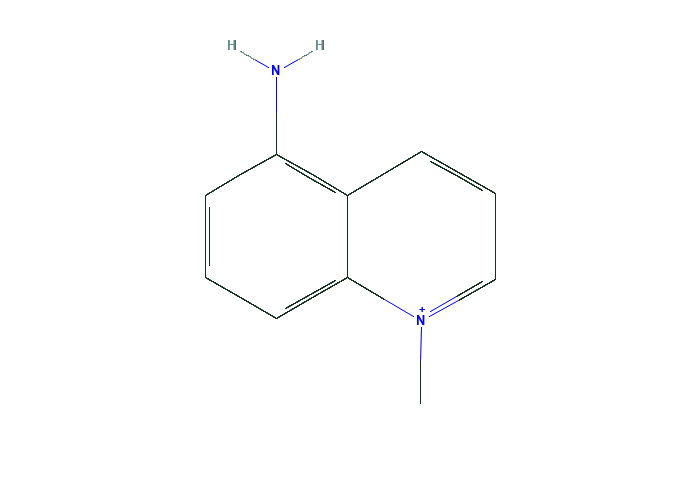
- What it is: 5-amino-1-methylquinolinium, a small molecule, not a peptide. It carries a permanent positive charge and is usually supplied as a salt [3,13].
- Target: it blocks NNMT, an enzyme that tags vitamin B3 (nicotinamide) with a methyl group and is overactive in the fat and liver of obese mice [1,3].
- Best evidence: an 11-day study in 18 obese mice (2018), plus later mouse studies from the same Texas group [3–7].
- Human data: none published. We found no registered trial on ClinicalTrials.gov as of October 2026.
- Status: not approved as a medicine anywhere; not named on the WADA list, but covered by its catch-all "non-approved substances" class [12].
A vitamin B3 enzyme that grows with the waistline
In 2014, a Harvard team went looking for the gene that changed most in mouse fat when they deleted or boosted a glucose transporter. The winner was not a famous metabolic switch. It was NNMT, an obscure enzyme best known for helping the body dispose of surplus vitamin B3 [1].
When the researchers turned NNMT down in the fat and liver of mice on a high-fat diet, the animals were protected from diet-induced obesity and burned more energy [1]. 5-Amino-1MQ is one of the first drug-like molecules built to block the same enzyme.
The appeal: in mice, weight and fat fell without any drop in appetite [3]. The catch: everything known about this compound comes from cells and rodents.
From a clearance enzyme to a Texas drug programme
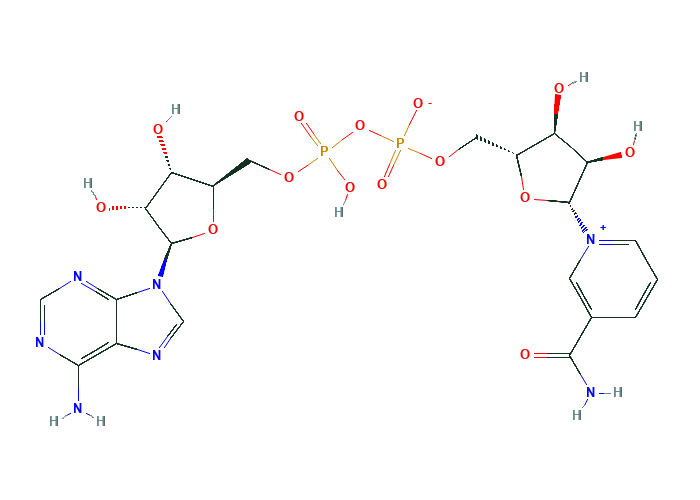
For decades NNMT was filed under "detox". It takes a methyl group from S-adenosylmethionine (SAM), the cell's universal methyl donor, and attaches it to nicotinamide. The product, 1-methylnicotinamide (1-MNA), is eventually excreted [11].
Stanley Watowich's group at the University of Texas Medical Branch in Galveston screened families of small charged ring molecules against the enzyme. Methylated quinoliniums stood out, blocking NNMT at around 1 µM, and computer docking placed them in the pocket where nicotinamide normally sits [2].
Their 2018 follow-up added amino groups to the quinolinium ring to help the molecules get into cells. Among the candidates, 5-amino-1MQ produced the biggest drop in 1-MNA inside cultured fat cells, so it became the compound tested in obese mice [3]. Watowich is the founder of Ridgeline Therapeutics, and several later papers list Ridgeline employees as authors [4,5,7].
How it works: plugging a drain
Picture the cell's vitamin B3 supply as a tank that feeds NAD+, the coenzyme every cell needs to turn food into usable energy. NNMT is a drain at the bottom of that tank. Each time it runs, one nicotinamide leaves the NAD+ recycling loop and one methyl group is spent from the SAM pool.
Plug the drain and, in principle, both stay in circulation. In cultured fat cells, 5-amino-1MQ lowered 1-MNA, raised NAD+ about 1.2- to 1.6-fold across a range of concentrations, raised SAM, and cut fat build-up during cell maturation by 50% at 30 µM and 70% at 60 µM [3]. Our NAD+ article covers why NAD+ attracts so much research interest.
The compound looked selective, sparing related methyl-transferring enzymes (DNMT1, PRMT3) and the NAD+ enzymes NAMPT and SIRT1 at relevant concentrations [3]. In the knockdown mice, less NNMT meant more SAM and NAD+ in fat, faster polyamine turnover and higher energy expenditure [1].
What the research shows
The genetic proof of concept (mice)
Kraus and colleagues used antisense drugs to cut NNMT by 60–75% in the fat of mice on a high-fat diet. Compared with controls, the mice had 47% less relative fat mass and 15% more relative lean mass, gained about half as much weight per calorie eaten, and had serum insulin levels roughly 50–60% lower [1].
The key 5-amino-1MQ study (mice, n=9 per group)
Male mice made obese on a high-fat diet received injections of 5-amino-1MQ or saline for 11 days [3]. Treated mice lost 2.0 g, about 5.1% of their starting weight, while controls gained 0.6 g, about 1.4% [3].
Food intake was essentially the same in both groups (26.2 g for treated mice versus 28.1 g for controls over the study), so the weight change was not explained by eating less [3].
Epididymal fat mass fell by about 35%, fat cells were more than 30% smaller, and total cholesterol was about 30% lower than in obese controls. The authors reported no observable adverse effects [3].
Follow-ups from the same group (mice)
- Diet plus inhibitor: obese mice switched to a lean diet lost 2.9 g on the diet alone and 6.3 g when the NNMT inhibitor was added. Fat mass fell about 29% versus 3% [4].
- Metabolic health: in a 28-day study, 5-amino-1MQ limited weight and fat gain in a dose-dependent way, improved glucose tolerance and insulin sensitivity, and reduced fatty liver changes [5].
- Ageing muscle: in 24-month-old mice with injured leg muscle, an NNMT inhibitor from the same programme produced regenerating fibres nearly twice as large and about 70% more peak force [6]. In 22- to 24-month-old mice, eight weeks of 5-amino-1MQ raised grip strength about 40%, versus 20% for exercise alone and 60% for both together [7].
Human evidence: about the enzyme, not the drug
In 199 surgery patients, people with type 2 diabetes had higher NNMT expression in their fat, and blood 1-MNA tracked insulin resistance. In two further groups (60 people on an exercise programme, 55 bariatric surgery patients), interventions that improved insulin sensitivity lowered fat NNMT [8]. That is an association. It does not show that blocking NNMT helps people.
What we don't know yet
- Any human result. No human safety or efficacy data exist. Our guide to levels of evidence explains why mouse results often fail to carry over.
- Independent replication. Almost all in vivo 5-amino-1MQ data come from one research group, and later papers declare links to the company it founded [4,5,7].
- Whether less NNMT is always better. In NNMT knockout mice, effects depended on sex and diet: males on a high-fat diet gained insulin sensitivity but not better glucose tolerance, while weight effects appeared in females on a Western diet [9].
- The liver. In mice, liver NNMT and its product 1-MNA had metabolic benefits: adding 1-MNA to a high-fat diet lowered cholesterol and liver fat, through the protein SIRT1 [10]. That points the opposite way.
- Conflicting human signals. In a human weight-loss study, NNMT in fat biopsies rose while blood 1-MNA fell [9].
- Safety. Studies lasted 11 days to 8 weeks. At the highest concentration tested (600 µM) the compound killed about 40% of cultured fat precursor cells [3], and no long-term toxicology has been published. NNMT also helps clear excess vitamin B3 and shapes the cell's methyl supply, so chronic blockade could have effects nobody has measured [11].
- Small, narrow samples. The 2018 study used nine male mice per group [3].
Regulatory status
- Approval: 5-Amino-1MQ is not approved as a medicine by the FDA, the EMA or any other regulator, and has no registered human trials (our ClinicalTrials.gov check, October 2026).
- US compounding: it does not appear on the FDA's list of bulk substances flagged for significant safety risks in compounding (version current as of April 2026) [14].
- Sport: it is not named on the 2026 WADA Prohibited List. The S0 class, however, bans at all times any pharmacological substance with no current approval for human therapeutic use, a description this compound appears to fit [12].
In the lab: handling and storage
Unlike the peptides in our catalogue, the 5-Amino-1MQ research compound is a small organic salt, typically supplied as a dry solid; the iodide form has a molecular weight of 286.11 g/mol, against 159.21 for the active cation [13]. Common practice is long-term storage at −20 °C, sealed, dry and protected from light, with 2–8 °C acceptable for short periods. No published data cover its stability in solution, so laboratories usually prepare solutions fresh or freeze single-use aliquots to avoid repeated freeze–thaw cycles. Our storage guide covers the general principles.
FAQ
Is 5-Amino-1MQ a peptide?
No. It is a small molecule, a methylated quinoline ring with an amino group, weighing about 159 g/mol as the cation. It is often listed alongside peptides, but chemically it belongs with ordinary small-molecule drugs.
Has 5-Amino-1MQ been tested in humans?
Not in any published study. As of October 2026 there are no registered clinical trials, and all efficacy data come from cells and mice.
Does 5-Amino-1MQ raise NAD+?
In cultured mouse fat cells it raised NAD+ about 1.2- to 1.6-fold [3]. Whether it does so in living animals' tissues to a meaningful degree, or in people, has not been shown.
Is 5-Amino-1MQ banned in sport?
It is not named on WADA's list, but WADA's S0 class prohibits unapproved pharmacological substances at all times [12]. Athletes' anti-doping organisations are the authority on individual cases.
How Synthos supplies 5-Amino-1MQ
Every Synthos lot of 5-Amino-1MQ is tested by an independent laboratory, and the certificate of analysis for that lot comes with your order. Ask your representative to see it before you pay anything.
Further reading elsewhere
Coverage and explainers from other publications, picked and checked by our team.
- Lifespan.io · Aug 2024NNMT Inhibitor Improves Muscle Function in Aged Mice ↗Research news on the 2024 study in which NNMT inhibition, alone and with exercise, improved grip strength in old mice.
- New Atlas · Jan 2018Fat fighting drug could let you lose weight without dieting ↗News coverage of the 2018 University of Texas Medical Branch study of an NNMT inhibitor in obese mice; the headline overstates what a mouse study can show.
- ScienceDaily (Beth Israel Deaconess Medical Center release) · Apr 2014Novel approach to accelerate metabolism could lead to new obesity treatment ↗The research institution's own plain-language summary of the 2014 mouse study that put NNMT on the map.
- Nature (News & Views) · Apr 2014Targeting a fat-accumulation gene ↗A short expert commentary explaining why the discovery of NNMT's role in fat tissue mattered and what it might mean for obesity drugs.
References
- Kraus D, Yang Q, Kong D, et al. Nicotinamide N-methyltransferase knockdown protects against diet-induced obesity. Nature. 2014;508(7495):258-262. PubMed
- Neelakantan H, Wang HY, Vance V, et al. Structure-activity relationship for small molecule inhibitors of nicotinamide N-methyltransferase. J Med Chem. 2017;60(12):5015-5028. PubMed
- Neelakantan H, Vance V, Wetzel MD, et al. Selective and membrane-permeable small molecule inhibitors of nicotinamide N-methyltransferase reverse high fat diet-induced obesity in mice. Biochem Pharmacol. 2018;147:141-152. PubMed
- Sampson CM, Dimet AL, Neelakantan H, et al. Combined nicotinamide N-methyltransferase inhibition and reduced-calorie diet normalizes body composition and enhances metabolic benefits in obese mice. Sci Rep. 2021;11(1):5637. PubMed
- Babula JJ, Bui D, Stevenson HL, Watowich SJ, Neelakantan H. Nicotinamide N-methyltransferase inhibition mitigates obesity-related metabolic dysfunction. Diabetes Obes Metab. 2024;26(11):5272-5282. PubMed
- Neelakantan H, Brightwell CR, Graber TG, et al. Small molecule nicotinamide N-methyltransferase inhibitor activates senescent muscle stem cells and improves regenerative capacity of aged skeletal muscle. Biochem Pharmacol. 2019;163:481-492. PubMed
- Dimet-Wiley AL, Latham CM, Brightwell CR, et al. Nicotinamide N-methyltransferase inhibition mimics and boosts exercise-mediated improvements in muscle function in aged mice. Sci Rep. 2024;14(1):15554. PubMed
- Kannt A, Pfenninger A, Teichert L, et al. Association of nicotinamide-N-methyltransferase mRNA expression in human adipose tissue and the plasma concentration of its product, 1-methylnicotinamide, with insulin resistance. Diabetologia. 2015;58(4):799-808. PubMed
- Brachs S, Polack J, Brachs M, et al. Genetic nicotinamide N-methyltransferase (Nnmt) deficiency in male mice improves insulin sensitivity in diet-induced obesity but does not affect glucose tolerance. Diabetes. 2019;68(3):527-542. PubMed
- Hong S, Moreno-Navarrete JM, Wei X, et al. Nicotinamide N-methyltransferase regulates hepatic nutrient metabolism through Sirt1 protein stabilization. Nat Med. 2015;21(8):887-894. PubMed
- Pissios P. Nicotinamide N-methyltransferase: more than a vitamin B3 clearance enzyme. Trends Endocrinol Metab. 2017;28(5):340-353. PubMed
- World Anti-Doping Agency. World Anti-Doping Code International Standard: Prohibited List 2026 (S0, Non-approved substances). 2025. WADA
- National Center for Biotechnology Information. PubChem compound summaries: 5-amino-1-methylquinolinium (CID 950107) and its iodide salt (CID 66522933). Accessed October 2026. PubChem
- US Food and Drug Administration. Certain bulk drug substances for use in compounding that may present significant safety risks. Content current as of 22 April 2026. FDA
This article summarises published research for education and laboratory context. It is not medical advice. Synthos products are sold for laboratory research only and are not approved for human use.