Bacteriostatic water vs sterile water: what the 0.9% benzyl alcohol does
Bacteriostatic water and sterile water look identical. The difference is nine milligrams of benzyl alcohol per millilitre, and it explains the 28-day rule, the "not for newborns" warning and a few things every lab should know.

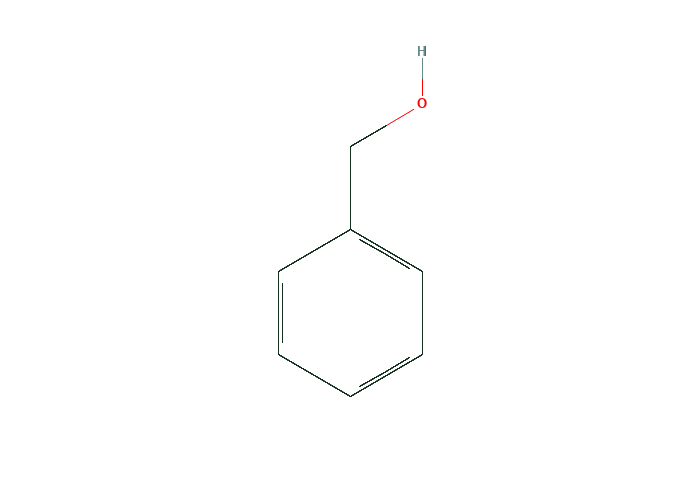
Benzyl alcohol, 0.9%
At a glance
- Bacteriostatic water for injection is sterile water with an antimicrobial preservative, usually 0.9% (9 mg/mL) benzyl alcohol.
- The preservative stops bacteria from multiplying; it does not kill everything or sterilise a contaminated vial.
- It is made for multi-dose use. US guidance says an opened multi-dose vial should be dated and discarded within 28 days unless the manufacturer states otherwise.
- Benzyl alcohol is not for newborns: in 1982, deaths of premature babies were linked to it, and every label now carries the warning.
- In the lab, the preservative is not always inert. It can promote aggregation of some proteins, and some compounds dissolve better in other solvents.
Two clear liquids, one difference
Put a vial of sterile water for injection next to a vial of bacteriostatic water and there is nothing to tell them apart. Both are sterile, pyrogen-free water. One of them, however, contains about 9 mg of benzyl alcohol in every millilitre [2], and that single ingredient changes how it can be used, how long it lasts once opened, and who must never receive it.
The US Pharmacopeia defines bacteriostatic water for injection as sterile water for injection containing one or more suitable antimicrobial agents [1]. In US products the agent is usually benzyl alcohol [2], a small aromatic alcohol that is also used as a fragrance ingredient [7].
What the standard requires
The USP monograph sets out what a product needs in order to carry the name [1]:
- glass containers no larger than 30 mL;
- a label stating the name and amount of each antimicrobial agent;
- the words "Not for use in newborns" in bold capital letters, directly under the name;
- a pH between 4.5 and 7.0, sterility, and bacterial endotoxins below 0.5 USP endotoxin units per mL.
A typical US label describes a sterile, nonpyrogenic water with 0.9% (9 mg/mL) benzyl alcohol, a pH of 5.7, supplied in a multiple-dose container "from which repeated withdrawals may be made" to dilute or dissolve drugs [2]. Synthos supplies it in 3 ml and 10 ml vials.
Bacteriostatic is not bactericidal
The names sound alike but describe different jobs. A bactericidal agent kills bacteria. A bacteriostatic agent stops them from growing and dividing, leaving the immune system or simple dilution to finish the work. One is an off switch; the other is a pause button.
At 0.9%, benzyl alcohol is a pause button. Its purpose is to stop the few microbes that might slip in on a needle from multiplying in the vial between uses. It does not sterilise a vial that has been badly contaminated, and it does not replace aseptic technique.
The 28-day convention
Because the preservative only holds bacteria in check, opened multi-dose containers do not last forever. The US Centers for Disease Control and Prevention, summarising USP chapter 797 on sterile compounding, states that once a multi-dose vial has been opened or needle-punctured it should be dated and discarded within 28 days, unless the manufacturer states a different date for that opened vial [3]. The beyond-use date should never go past the manufacturer's original expiry date [3].
Single-dose vials are a different category. They typically contain no antimicrobial preservative and are meant for a single case, procedure or injection [3].
Bacteriostatic water's whole purpose is to be entered more than once. That is why its preservative exists, and why the 28-day clock starts at the first puncture rather than at manufacture.
The 28-day rule was written for patient care. For research use, it is a sensible reference point rather than a legal requirement, and the manufacturer's label always takes precedence.
Three common liquids compared
| Sterile water for injection | Bacteriostatic water for injection | 0.9% sodium chloride (saline) | |
|---|---|---|---|
| What it is | Sterile, pyrogen-free water | Sterile water with an antimicrobial preservative [1] | Sterile water with 9 g/L sodium chloride |
| Preservative | None [2] | Usually 0.9% benzyl alcohol [2] | None, unless labelled "bacteriostatic" [4] |
| Container | Usually single-dose, since it has no preservative [3] | Multiple-dose; glass no larger than 30 mL [1] | Single-dose or bag, unless preserved |
| After opening | Use once | Discard within 28 days unless the label says otherwise [3] | Use once if unpreserved |
| Tonicity | Hypotonic | Hypotonic [2] | Isotonic with blood |
| Not suitable for | Uses that need salt or isotonicity | Newborns; compounds incompatible with benzyl alcohol [2] | Compounds that salt out or need salt-free conditions |
The gasping syndrome: why "not for newborns" is on every label
In June 1982, the CDC reported 16 deaths of premature babies at two US hospitals [4]. The infants had central catheters flushed periodically each day with bacteriostatic saline containing 9 mg/mL benzyl alcohol, and the CDC noted that bacteriostatic water used to dilute medicines can contain the same preservative [4]. Their illness developed over days to weeks: metabolic acidosis, then respiratory distress with "gasping" breathing; many also had seizures and bleeding in the brain [4]. The hospitals reported no further similar deaths after switching to preservative-free solutions [4].
Later that year, Gershanik and colleagues described the "gasping syndrome" and linked it to benzyl alcohol poisoning in the New England Journal of Medicine [5]. The FDA recommended that benzyl alcohol–containing flushes and diluents not be used in newborns [4]. The CDC's own editorial note urged caution in blaming any single death on benzyl alcohol, since the babies were already critically ill [4], but the warning stuck. Today's labels contraindicate benzyl alcohol solutions in neonates and say that only preservative-free sterile water should be used for them [2].
Benzyl alcohol hypersensitivity
Allergic reactions to benzyl alcohol are uncommon but real. A 1982 letter in the New England Journal of Medicine described unsuspected benzyl alcohol hypersensitivity [6]. The American Contact Dermatitis Society named benzyl alcohol its Allergen of the Year for 2026, pointing out that it is used as a preservative, solvent and fragrance in cosmetics, topical medicines and injectable formulations, and that it is missing from many standard patch-test panels, so allergy to it is probably under-recognised [7].
In the lab: the preservative is not always inert
The preservative is there for the microbes, but it can also interact with whatever is dissolved in it. Benzyl alcohol is the most widely used preservative in multi-dose protein formulations, yet it has been shown to cause aggregation: with interferon alfa-2a, for example, it promoted clumping in a concentration-dependent way by partially unfolding the protein [8]. The bacteriostatic water label itself warns that some drugs may be incompatible with a vehicle containing benzyl alcohol [2].
Short peptides have been studied far less. The safe reading is that compatibility is compound-specific, and that a small test before committing a whole vial is good practice, as it is for any solvent.
What peptides are traditionally dissolved in
There is no single right answer, because solubility depends on the sequence. General lab guidelines from a US National Cancer Institute–convened consortium sort peptides by charge [10]:
- Acidic peptides, with more aspartic and glutamic acid than lysine, arginine and histidine, dissolve best in basic solutions.
- Basic peptides, with the opposite balance, dissolve best in acidic solutions, such as dilute acetic acid.
- Neutral or very hydrophobic peptides often need some organic solvent, such as acetonitrile or dimethylformamide.
The same guidelines recommend dissolving a small portion first before committing the whole lot [10]. Some approved peptide medicines use bacteriostatic water directly: lyophilised tesamorelin (Egrifta WR), for example, is supplied with a 30 mL multiple-dose bottle of bacteriostatic water for injection as its diluent [9]. Our guide to storing research peptides covers what happens to a peptide once it is in solution.
FAQ
Is bacteriostatic water the same as sterile water?
How long does bacteriostatic water last after opening?
US guidance based on USP chapter 797 says an opened multi-dose vial should be discarded within 28 days unless the manufacturer specifies otherwise, and never after its expiry date [3].
Why is bacteriostatic water not for newborns?
Research Library
Every Synthos lot is tested by an independent laboratory, and the certificate of analysis for that lot comes with your order. Ask your representative to see it before you pay anything.
Further reading elsewhere
Coverage and explainers from other publications, picked and checked by our team.
- DailyMed (US National Library of Medicine) · Jul 2026BACTERIOSTATIC WATER injection, solution ↗The full US label for a standard bacteriostatic water product: composition, pH, warnings and storage.
- Dermatitis · Nov 2025Benzyl Alcohol: Allergen of the Year 2026 ↗Why the American Contact Dermatitis Society named benzyl alcohol, the preservative in bacteriostatic water, its 2026 Allergen of the Year.
- CDC · Mar 2024Preventing Unsafe Injection Practices ↗CDC guidance on single-dose and multi-dose vials, including the 28-day rule for opened multi-dose vials.
- CDC (MMWR) · Jun 1982Neonatal Deaths Associated With Use Of Benzyl Alcohol -- United States ↗The original 1982 CDC report on the premature-infant deaths that put the "not for newborns" warning on every bacteriostatic water label.
References
- United States Pharmacopeia. Bacteriostatic Water for Injection [monograph]. USP 38–NF 33. Rockville, MD: United States Pharmacopeial Convention; 2015. Cited for the definition, container size limit, labelling and test requirements.
- Hospira. Bacteriostatic Water for Injection, USP: prescribing information (revised August 2019). DailyMed, National Library of Medicine. Cited for the composition (0.9% benzyl alcohol, pH 5.7), multiple-dose use, neonatal contraindication, tonicity and incompatibility warnings. DailyMed
- Centers for Disease Control and Prevention. Preventing unsafe injection practices (multi-dose and single-dose vials). Cited for the 28-day rule for opened multi-dose vials and the definition of single-dose vials. CDC
- Centers for Disease Control (CDC). Neonatal deaths associated with use of benzyl alcohol: United States. MMWR Morb Mortal Wkly Rep. 1982;31(22):290-291. Cited for the 1982 neonatal deaths, their clinical features and the FDA recommendation. CDC
- Gershanik J, Boecler B, Ensley H, et al. The gasping syndrome and benzyl alcohol poisoning. N Engl J Med. 1982;307(22):1384-1388. Cited for the description of the gasping syndrome. PubMed
- Grant JA, Bilodeau PA, Guernsey BG, Gardner FH. Unsuspected benzyl alcohol hypersensitivity. N Engl J Med. 1982;306(2):108. Cited for an early report of benzyl alcohol hypersensitivity. PubMed
- Le NT, Wu PA. Benzyl alcohol: Allergen of the Year 2026. Dermatitis. 2026;37(1):4-12. Cited for benzyl alcohol as the 2026 Allergen of the Year and its uses. PubMed
- Bis RL, Singh SM, Cabello-Villegas J, Mallela KM. Role of benzyl alcohol in the unfolding and aggregation of interferon α-2a. J Pharm Sci. 2015;104(2):407-415. Cited for benzyl alcohol-induced protein aggregation. PubMed
- Theratechnologies. Egrifta WR (tesamorelin) for injection: US prescribing information, dosage forms and how supplied. DailyMed, National Library of Medicine. Cited for bacteriostatic water as the supplied diluent of an approved peptide medicine. DailyMed
- Hoofnagle AN, Whiteaker JR, Carr SA, et al. Recommendations for the generation, quantification, storage, and handling of peptides used for mass spectrometry-based assays. Clin Chem. 2016;62(1):48-69. Cited for general peptide solubility guidelines. PubMed
This article summarises published research for education and laboratory context. It is not medical advice. Synthos products are sold for laboratory research only and are not approved for human use.